

Phnom Penh
Phnom Penh is the capital and largest city in Cambodia. It is a cultural, commercial, and political center that offers a unique blend of traditional charm and urban bustle.
Phnom Penh is a place of diverse economic and urban growth. A swift wave of development has brought in new highrise buildings–including a 30-storey business center–restaurants catering to every palate, and stylish hotels promising all levels of luxury. Contributing to this development are burgeoning culinary and nightlife scenes that can rival any other in the region.
The alluring capital city also features a wide variety of historical and cultural attractions, along with myriad opportunities to sample local Cambodian culture. Here, classic colonial facades endure alongside sleek new eateries, golden-spired pagodas, and buzzing markets– all evidence of the dynamic energy of Phnom Penh’s city streets.
Phnom Penh’s famous riverfront is lined with trendy pubs, bistros, and restaurants. Stores offering beautiful Cambodian silk products and chic galleries dot the side streets. Add to this a blooming arts scene and a heady dusk-to-dawn nightlife and you’ll understand why Phnom Penh has become such a well-loved and compelling tourist destination.
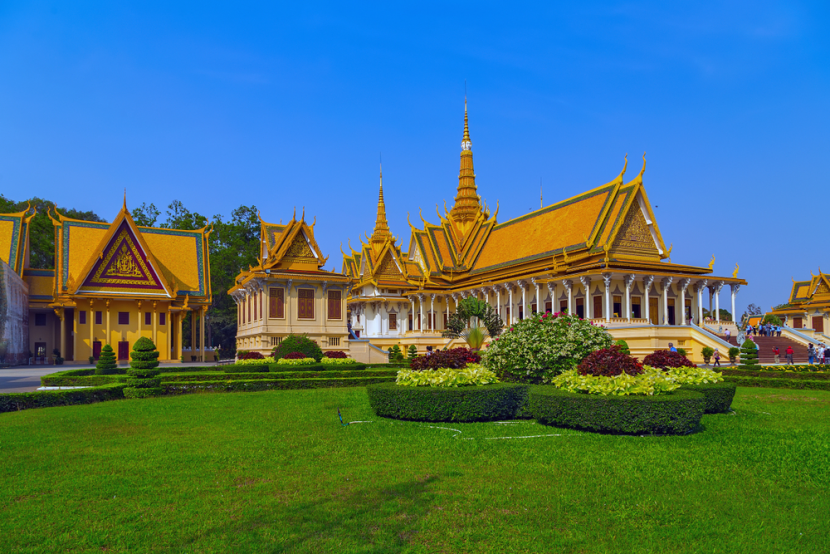
Royal Palace
The Royal Palace of Cambodia is a complex of buildings, even though it is generally understood to be the royal abode of the King of Cambodia. The compound was the citadel of King Ponhea Yat (1393-1463) and rebuilt to its present state in 1886, when King Norodom (1834-1904) relocated the royal capital from Oudong to Phnom Penh. The buildings with beautiful towering spires are a great example of classic Khmer architecture found in Cambodia today.
Along with numerous other interesting buildings within the 183,135 square meters (421m x 435m) compound is The Khemarin Palace, also known as Prasat Khemarin or the “Palace of the Khmer King.” This is officially the residence of His Majesty, King Norodom Sihamoni.
Inside the palace grounds, the noises from the street are silenced by the high walls surrounding the compound. While tourists cannot enter the area of the royal abode, visitors can gain entry to the Throne Hall (Preah Tineang Tevea Vinichhay) where coronations and official ceremonies take place, the Temple of the Emerald Buddha (Wat Preah Keo Morakot), Stupas (Chedei), a Royal Dining Hall, the Chan Chhaya Pavilion and a French-style building that was a gift from Napoleon III.
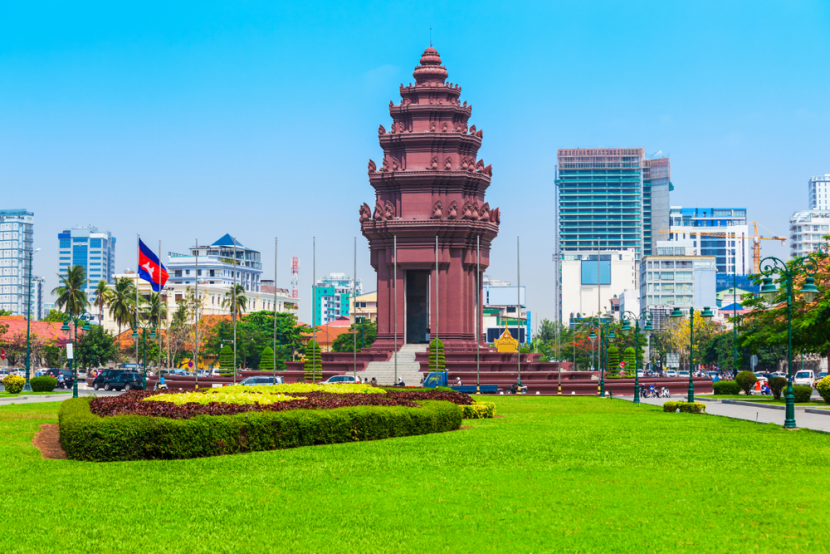
Independence Monument (Vimean Ekareach)
Built in 1958 as a memorial to Cambodia’s war dead and to celebrate independence from foreign rule, the monument stands majestically on the intersection of Norodom Boulevard and Sihanouk Boulevard in the centre of the city. It is designed by the influential Cambodian modern architect Vann Molyvann in the form of a lotus-shaped stupa in the same style seen at the great Khmer temple at Angkor Wat and other Khmer historical sites. The monument consists of five tiers decorated with 100 Nagas and is most impressive in the late afternoon hours when the sun casts shadows over the sculptures.
Cambodia celebrates Independence Day on 9 November each year. The Independence Monument, already one of Phnom Penh’s most significant structures, becomes even more celebrated when His Majesty King Norodom Sihamoni leads the annual jubilation by ceremoniously lighting a giant torch placed inside the monument in front of a huge spectator of high officials from the government, private sectors and members of the Cambodian public.
 Independence Monument
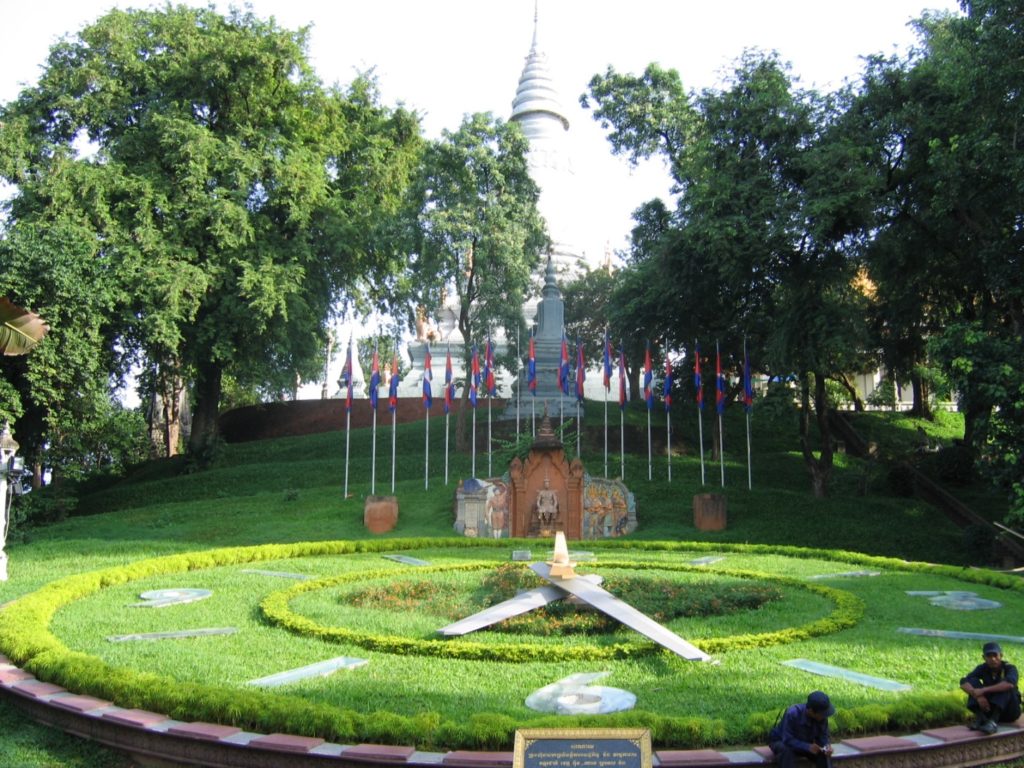
Wat Phnom (Wat Phnom Daun Penh)
Wat Phnom, the namesake and symbol of the capital city of Phnom Penh, sets prominently atop an artificial 27 meter hill (or ‘Phnom’) in the northeastern section of the city. Legend has it that Daun Penh, a wealthy widow, retrieved a large koki tree trunk from the river. She had hoped to use it for a house, but inside a hollow of the trunk, she found four statues of the Buddha. She then ordered for a section of her property to be elevated for a small shrine to be erected to revere the statues. This became a sacred site and people started to settle around the hill; eventually, this became the city it now is. It is here that the city gets its name: ‘Phnom’ means hill in Khmer and ‘Penh’ is of course the name of the lady.
Later, King Ponhea Yat (1393-1463), built the sanctuary (Vihear) here when he moved his capital from Angkor to Phnom Penh in 1422. The prominent stupa immediately west of the sanctuary or vihara (vihear) contains the ashes of the late king.
The sanctuary itself has been renovated frequently. There are numerous other shrines and other activities on or at the base of the hill. There are gardens that the French laid out in the late nineteenth century and shrines that reflect Taoist, Confucian, Hindu beliefs and one especially of Vietnamese interests reflected in the shrine to Preah Chau.
 Wat Phnom
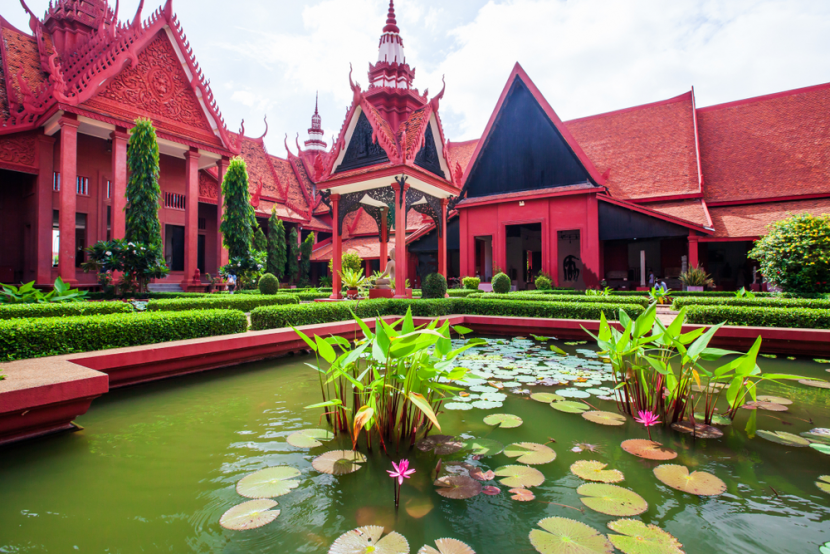
National Museum
The National Museum of Cambodia in Phnom Penh is the country’s leading historical and archaeological museum. It was officially inaugurated by King Sisowat in 1920.
The buildings are inspired by Khmer temple architecture and house more than 14,000 items. The National Museum contains the world’s largest collection of Khmer art, including sculpture, ceramics, bronzes, and ethnographic objects dating from prehistoric times to periods before, during, and after the Khmer Empire.
The Museum also serves a religious function. Its collection of important Buddhist and Hindu sculptures includes a Post-Angkorian Buddha supported by UNESCO.
 National Museum
Toul Sleng Genocide Museum (S-21)
Prior to 1975, Toul Sleng was a high school. When the Khmer Rouge came to power it was converted into the S-21 prison and interrogation facility. Inmates were systematically tortured to extract confessions, after which they were executed at the killing fields of Choeung Ek. S-21 processed over 17,000 people, less than a dozen of whom survived. The building now serves as a museum, a memorial and a testament to the madness of the Khmer Rouge regime.
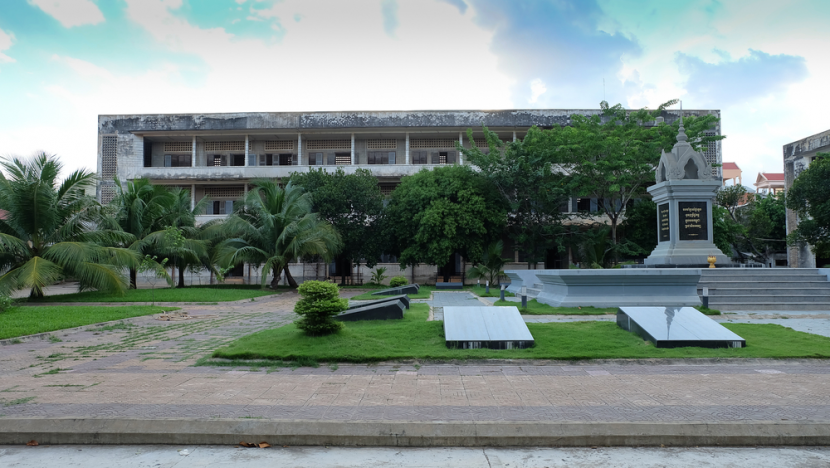 Toul Sleng Genocide Museum
Choeung Ek Memorial (The Killing Fields)
Located about 17km south of Phnom Penh, Choeung Ek was once an orchard and a Chinese graveyard. It was used by the Khmer Rouge regime as an execution ground to put down thousands of people between 1975 and 1979. The site is now better known as the Killing Fields. Mass graves containing thousands of bodies were discovered at Choeung Ek after the fall of the Khmer Rouge regime. Many of the dead were former inmates in the Tuol Sleng prison.
Today, Choeung Ek is a memorial, marked by a Buddhist stupa. The stupa has acrylic glass sides and is filled with more than 5,000 human skulls; many of which are either shattered or had evidently been smashed. It is believed that the Khmer Rouge soldiers kill their victims by smashing them on the head, in order to save on bullets.
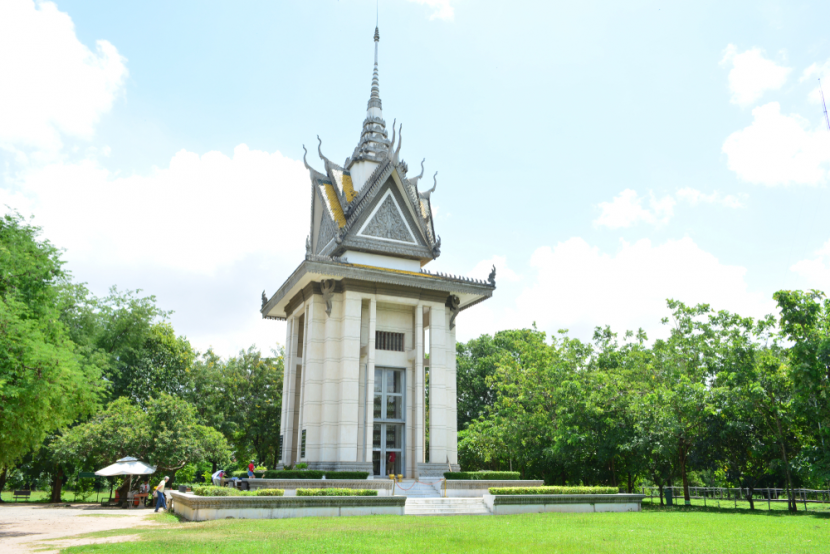 The Killing Fields
Phsar Thmey (Central Market)
Phsar Thmey, also known as Central Market, is a unique colonial style building constructed in 1937. The location where the Central Market now sits was once a swamp area and occupied by a lake known as Beng Decho. Today, this beautiful market has become a prominent landmark in Phnom Penh. In the Khmer language, Phsar Thmey literally means ‘New Market’.
Phsar Themey features a stylish Art Décor rotunda with wings extending in four different directions symbolizing the Chaktomouk (Confluence of four rivers). The Dome, symbolizing the economic center, is said to be amongst the largest in the world. The four broad wings constructed without obstructing pillars and the huge beamless dome are very well ventilated by the high ceiling.
This market is crowded with activity on any given day, and visitors can purchase almost anything from fresh produces to cooked food, jewelry, watches, shoes, stationery, flowers, clothes including t-shirts and lots of tourist souvenirs.
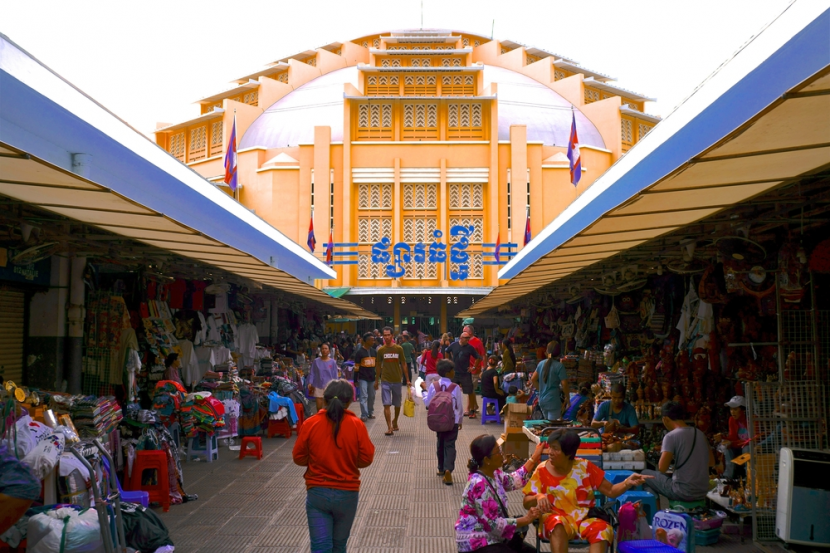 Phsar Thmey


